
A complete system from the start
Mobile, Admin, and Server share contracts. Each layer knows its responsibility and how it works with the other two.
Build Android, iOS, and HarmonyOS with uni-app x, run operations in React, and serve APIs with Go and PostgreSQL. Mobile, admin, and server share one contract from day one.
WHY APPKERNIA
I kept meeting the same problem from one app project to the next: mobile frameworks, Admin templates, and server scaffolds are all abundant. But once a product needs Android, iOS, HarmonyOS, operations, permissions, files, notifications, and dependable APIs, developers are still left to bridge every seam.
That is why I started AppKernia. It is not another framework that tries to own every decision. It connects the foundation every app team rebuilds, so you can reach the problems that are unique to your product sooner.
Mobile, Admin, and Server share contracts. Each layer knows its responsibility and how it works with the other two.
Security, i18n, authorization, state, and engineering become defaults, returning development time to product experience.
Explicit contracts, stable dependencies, and evolvable structure make the project easier to understand, extend, and improve together.
ONE FOUNDATION · THREE SURFACES
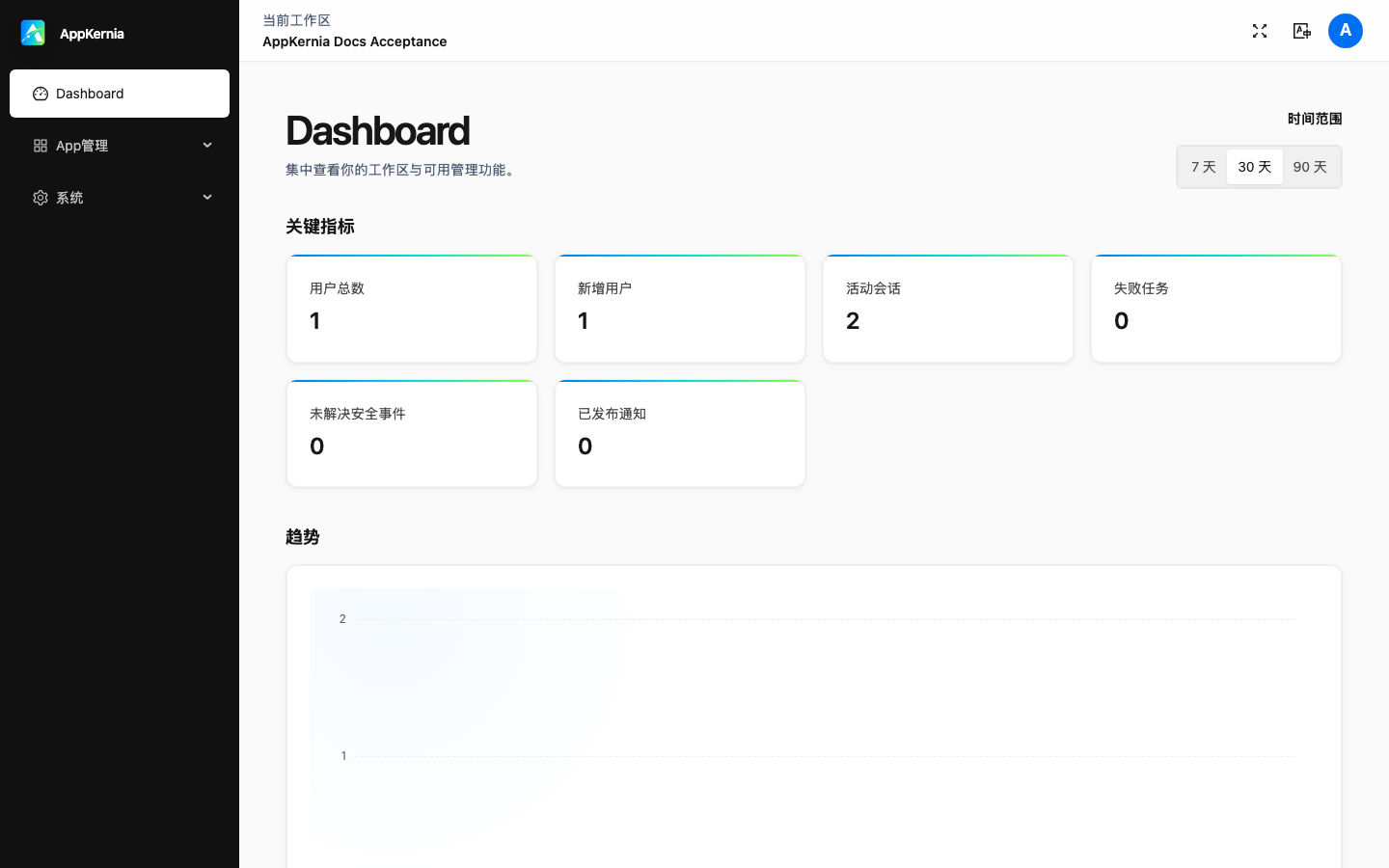
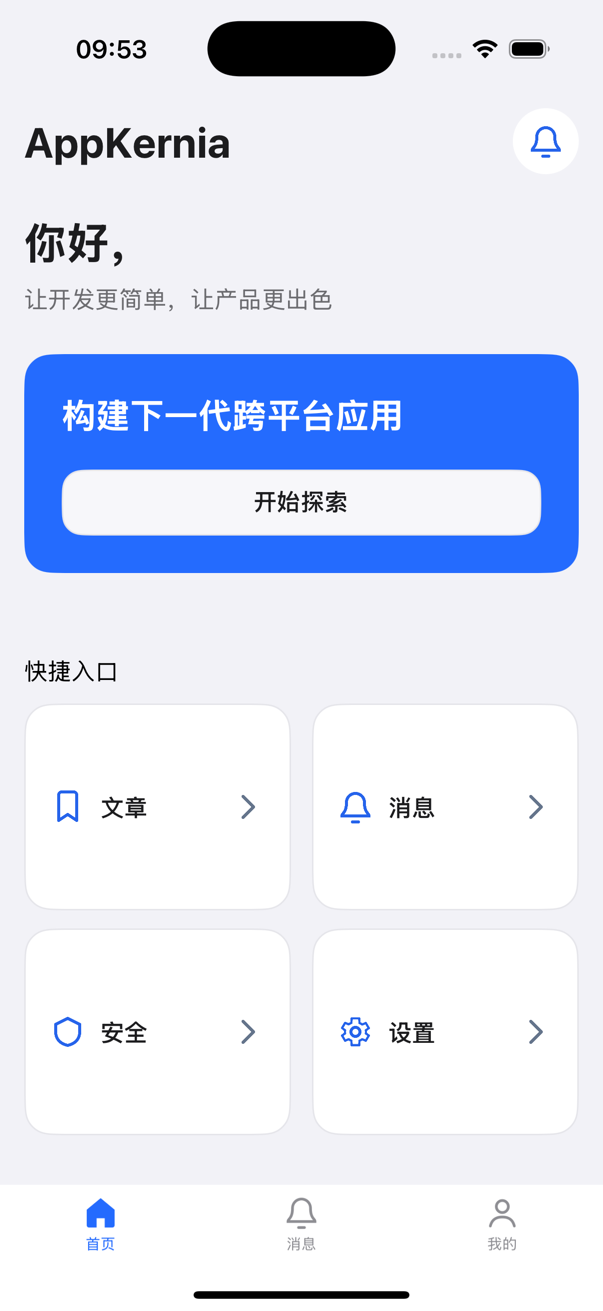
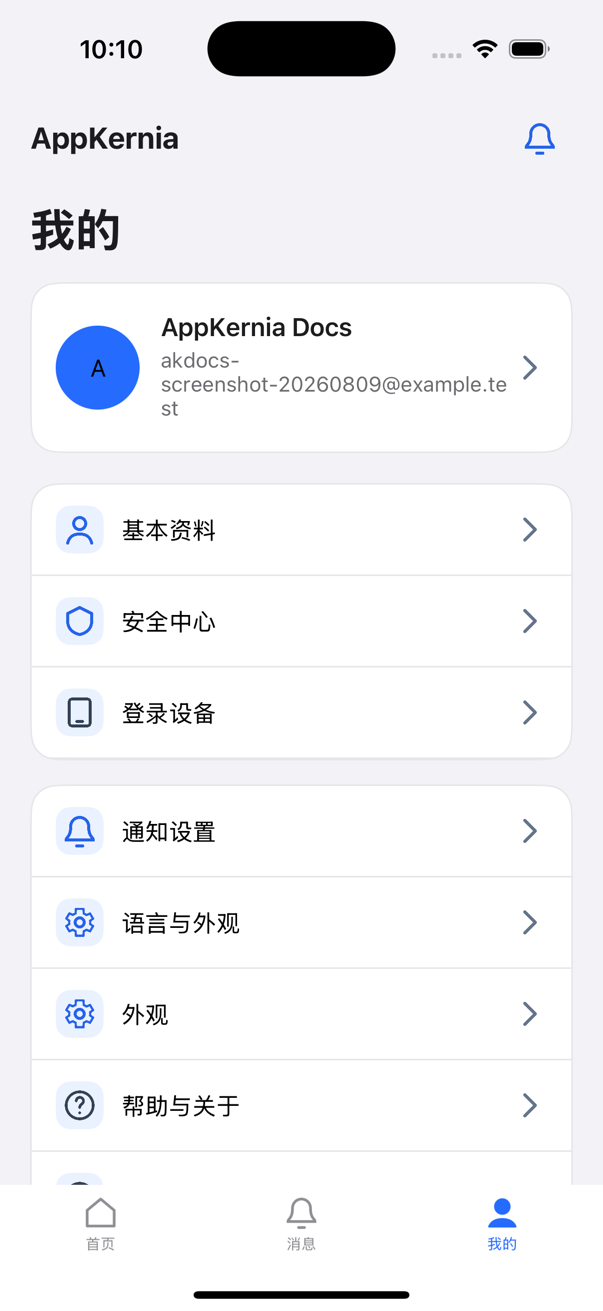
These are not three templates placed next to each other. Routes, identity, locale, authorization, and error codes move through one contract while each surface focuses on what it does best.
A uni-app x foundation for Android, iOS, and HarmonyOS NEXT with typed networking, secure storage, static routes, and an AK UI layer.
An operations console built around real permissions, organizations, multi-tenancy, and safe administrative workflows.
A PostgreSQL-first modular Go backend with OpenAPI contracts, rotating sessions, audit, jobs, files, and notification modules.
BUILT ON PROVEN TOOLS
uni-app x connects mobile platforms, React shapes the operations experience, Go and PostgreSQL carry the business and its data, and OpenAPI keeps every surface speaking the same language.
 uni-app xMobile
CORE FEATURES
Identity, authorization, data, releases, and internationalization follow the same rules, so you can shape the business instead of repeatedly repairing the seams between surfaces.
Access Tokens, Refresh Token rotation, audience isolation, and secure client storage form one coherent path.
Explore authentication →02The frontend delivers a clear experience while Backend and SQL own authorization and tenant isolation, keeping one source of truth for access.
Explore the permission model →03zh-CN and en-US span API, Admin, Mobile, and docs with stable error codes and fallback rules.
Understand the locale contract →04Routes, requests, responses, and errors flow from the server source of truth into generated clients.
Browse the API →05Shared components and Props, Event, and Slot contracts isolate mobile pages from platform details.
View mobile components →06Migrations, tests, CI, and bilingual documentation evolve with the code, helping new contributors join one shared workflow.
Read the development guide →CAPABILITY MATRIX
From sign-in to content publishing, follow one row to see how Mobile, Admin, and Server divide the work.
| Capability | Mobile | Admin | Server |
|---|---|---|---|
| Identity and sessions | Device identity, secure storage, refresh coordination | Secure cookies, session and MFA management | Audience isolation, rotation, revocation |
| Authorization and tenancy | Capability gates and stable error codes | Menu, action, and data-scope UX | Server authorization and SQL tenant filters |
| Content and operations | Articles, notifications, versions, profile | Content, files, jobs, settings, audit | Versioned content, object storage, workers |
| Internationalization | AkI18n, navigation, system formats | i18next, Ant Design, Day.js | LocaleResolver and embedded catalogs |
QUICK START
akone embeds Admin and uses SQLite by default. Choose the installation method for your system to get started.
Release status: Shell, npm, and manual downloads await the first Preview; Homebrew awaits a stable release. For now, use the default Source build tab.
Available now
Requires Go 1.26.5, Node.js 24, and pnpm 11. The binary embeds Admin and starts with SQLite by default.
git clone https://github.com/Payhon/AppKernia.git
cd AppKernia
corepack enable
pnpm install --frozen-lockfile
make build-akone
mkdir -p "$HOME/.local/bin"
install -m 0755 ./server/bin/akone "$HOME/.local/bin/akone"
export PATH="$HOME/.local/bin:$PATH"
akone version --json
The PATH change affects only this terminal. Persist it in your shell profile if needed.
0.5.0
For macOS and Linux on amd64 or arm64; the installer verifies SHA-256.
curl -fsSL https://static.appkernia.com/akone/latest.sh | sh
export PATH="$HOME/.local/bin:$PATH"
akone version --json
The installer verifies the archive checksum, archive version, and embedded binary version.
Preview available
Installs the native akone executable on macOS, Linux, and Windows.
npm install --global @appkernia/akone@preview
akone version --json
This is a separate historical Preview channel, not the R2 0.5.0 distribution.
After a stable release
Installs akone on macOS from the official AppKernia tap.
brew install payhon/tap/akoneThe tap is not published yet; the release workflow only creates a Formula for stable releases.
0.5.0
Download the matching archive from static.appkernia.com and verify checksums.txt.
akone_0.5.0_darwin_amd64.tar.gz
akone_0.5.0_darwin_arm64.tar.gz
akone_0.5.0_linux_amd64.tar.gz
akone_0.5.0_linux_arm64.tar.gz
akone_0.5.0_windows_amd64.zipmacOS and Windows artifacts do not yet have native signing. This release does not update npm, Homebrew, or GitHub Releases.
The commands below assume akone is on PATH. The Source and Shell tabs set that path
for the current terminal.
The password is read from a hidden terminal prompt and never written to shell history.
akone bootstrap-admin --email admin@example.com --tenant-code local --tenant-name "Local Workspace" --display-name AdministratorThe default database is data/appkernia.db beside the binary. Then open
http://127.0.0.1:8080/admin/.
akone servePRODUCT, END TO END
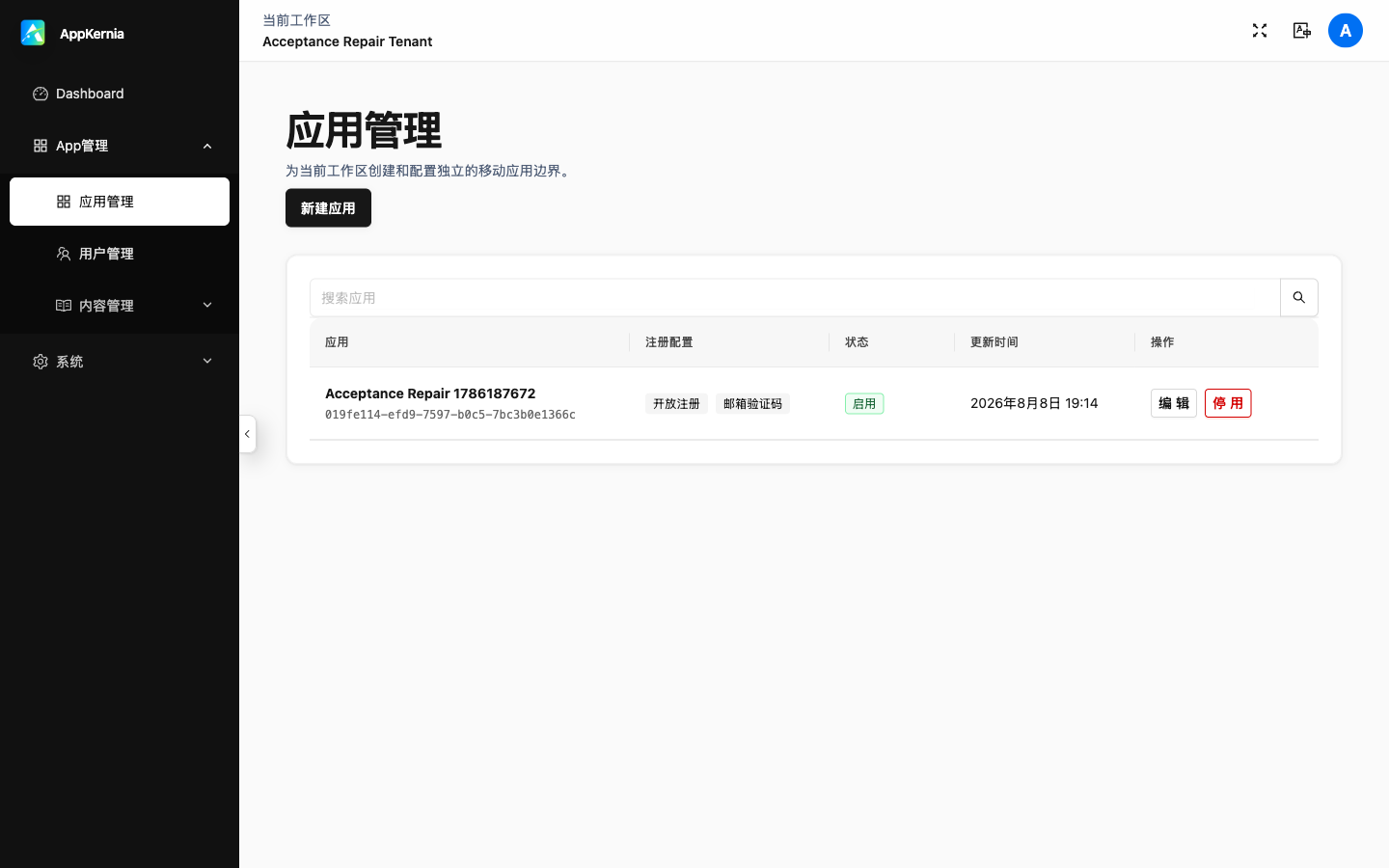
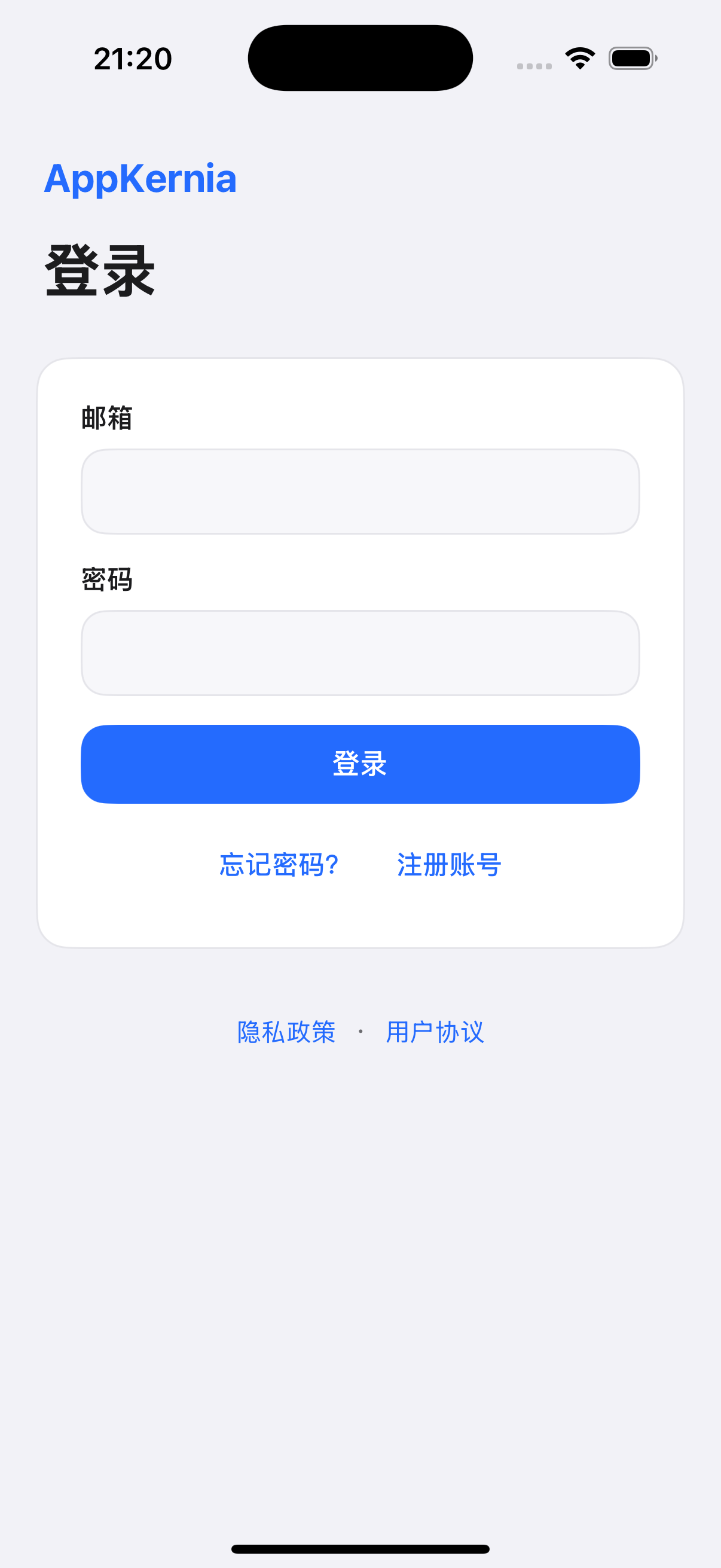
Manage applications, content, releases, and storage in Admin, then carry sign-in, notifications, reading, and account experiences into Mobile. Both surfaces meet through the same API and product rules.
FAQ
No. It is an auditable, extensible engineering foundation and contract system. Product behavior is still implemented in Go, React, and UTS/UVue.
Use it to evaluate full-stack app architecture, start a new project, or help shape an open-source foundation. AppKernia is still in 0.x and will evolve quickly; before launch, complete the security, performance, backup, and platform testing your product needs.
Because HarmonyOS should not be the platform a cross-platform stack adds last. AppKernia puts HarmonyOS NEXT on the main mobile path, so components, routes, networking, and engineering conventions evolve together.
Absolutely. Reproduce an issue, improve docs, review a design, add tests, check platform compatibility, or refine a translation. The community guide takes you from a first small change to a code contribution.
BUILD WITH US
From opening an issue and clarifying a paragraph to adding a component or platform adaptation, every contribution helps the next developer start more easily. If you like AppKernia, leave a Star on GitHub so more people looking for a complete app foundation can find it.