
What is AppKernia?
AppKernia is an open-source foundation for real application projects. It places Mobile, Admin, and Server under one set of contracts for identity, authorization, security, internationalization, and engineering quality, so developers can begin from a running system instead of rebuilding sign-in, users, tenants, files, notifications, and an operations console every time.
It is neither an Admin template with a mobile shell nor a cross-platform UI kit alone. AppKernia addresses a longer journey: from the first app launch, through an operator's Admin workflow, to the API, Worker, and PostgreSQL safely completing the business operation.
In one sentenceMobile owns the user experience, Admin owns operations workflows, Server owns trusted business facts, and shared OpenAPI, permissions, and data contracts keep all three aligned.
Why this project exists
By 2026, the maintainer kept meeting the same gap while building apps. Mobile frameworks are plentiful, as are Admin starters and backend templates. But when one product needs an App, an operations console, authentication and sessions, multi-tenancy, internationalization, and especially a serious HarmonyOS path, developers still end up joining several systems that were never designed to agree.
The expensive work is often not the first business screen. It is the foundation every product needs but few teams can afford to get wrong: where tokens live, how Admin and Mobile identities stay isolated, how permissions reach SQL, how two languages cross API and UI boundaries, how components contain platform differences, and how a contract change avoids drifting across three clients.
AppKernia begins with that frustration. It does not decide a product's domain for its developers; it aims to build the repetitive, fragile, important groundwork together. An independent developer or a small team can then spend more time on the product that makes their work unique instead of rebuilding infrastructure for the first month.
What the name means
The project's intended naming story has three parts:
Start from the application in a user's hand, including installation, sessions, notifications, and platform experience.
Express the kernel or core: identity, contracts, authorization, data, and quality become a reusable foundation.
Suggest a place that can grow, where different products build their own domain on a shared core.
A compact engineering name used across ak-api, ak-admin, ak-mobile, and the ak-* UI
layer.
This is the product's own brand interpretation. AppKernia is not intended to lock every domain into one enormous platform; it aims to be a trustworthy, open application kernel that teams can extend.
Why these technologies
The stack follows long-term boundaries and maintainability rather than a popularity checklist.
Read Architecture to see how these parts connect, or go directly to Run from source if you want to try the system first.
Real Admin features
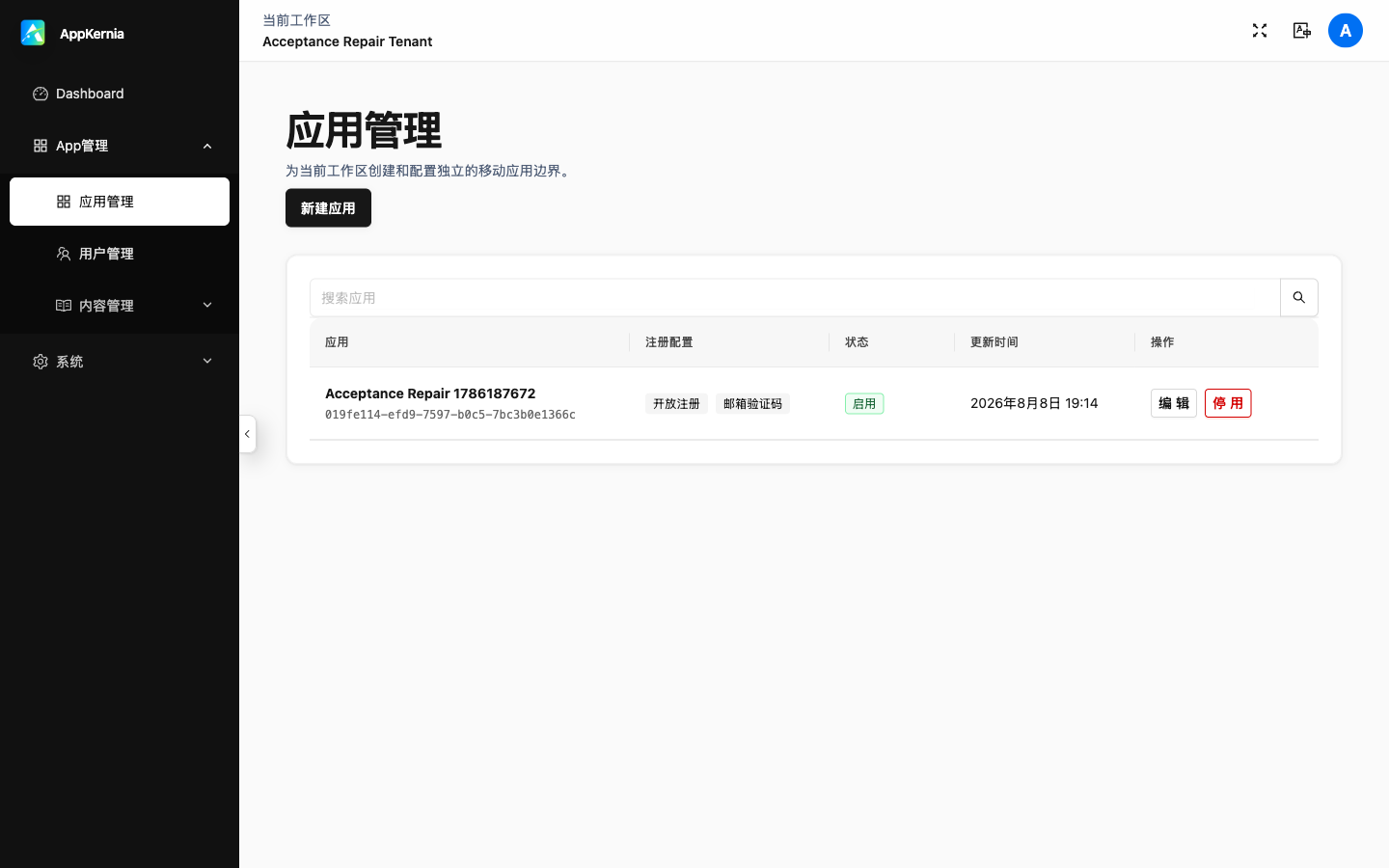
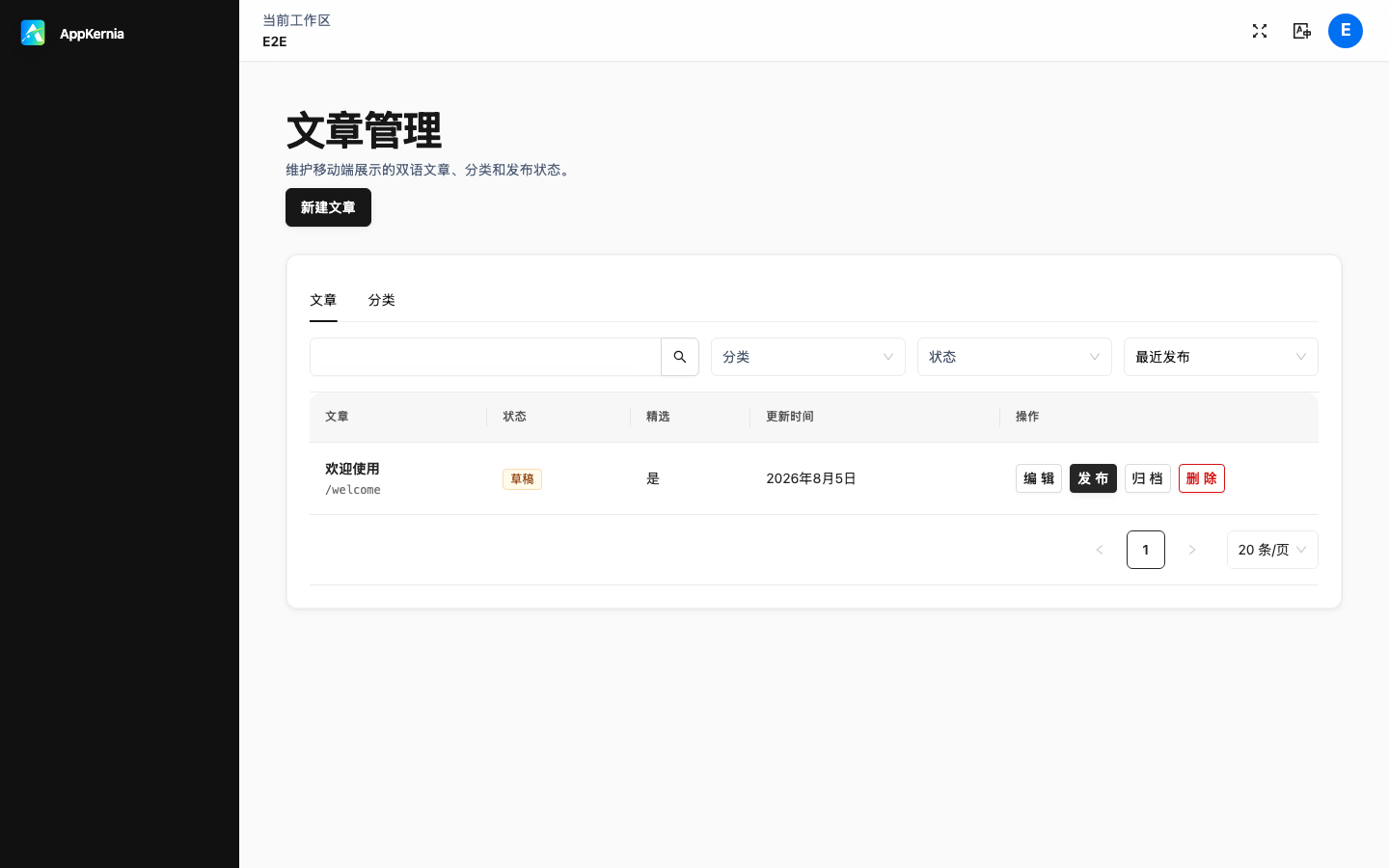
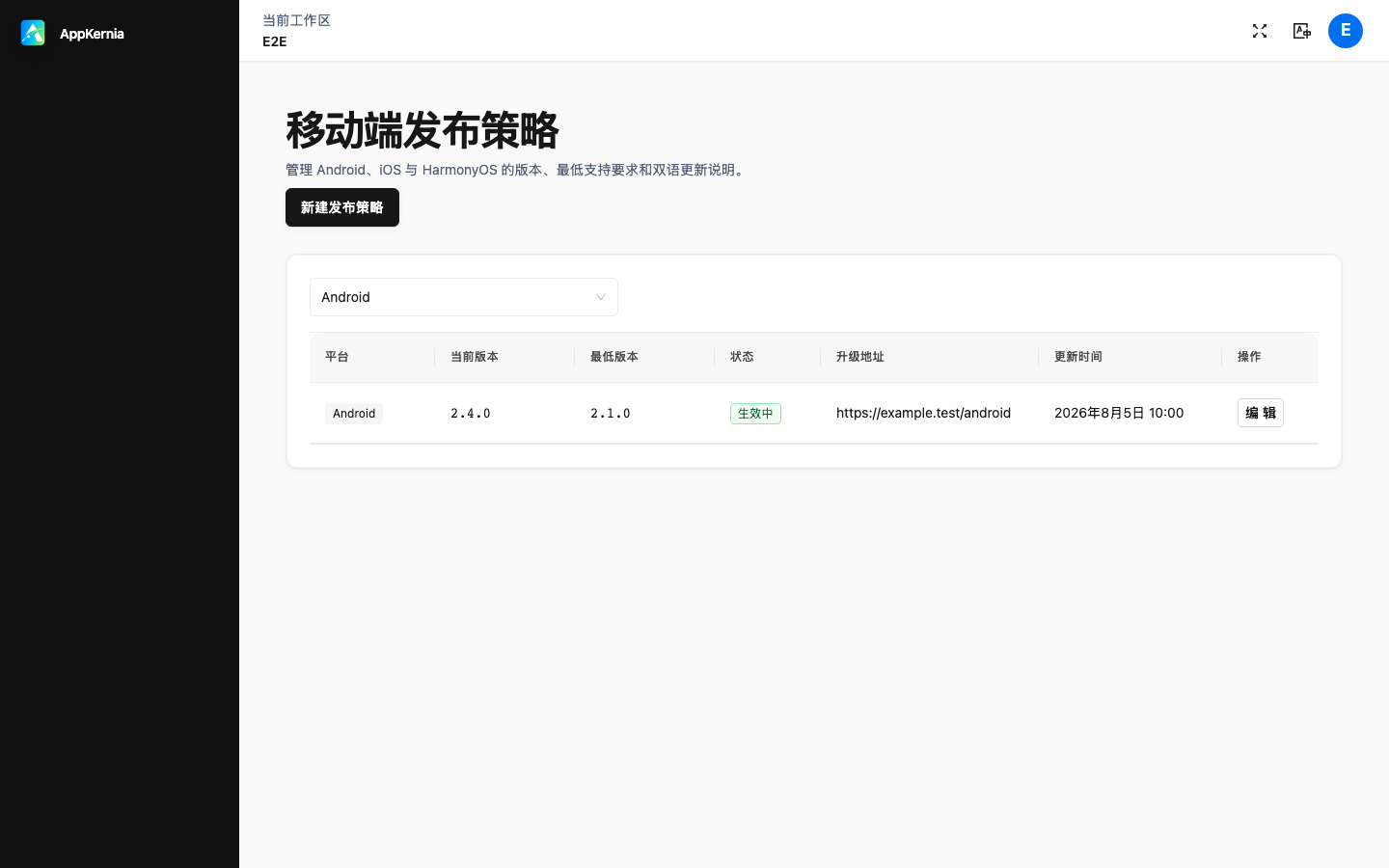
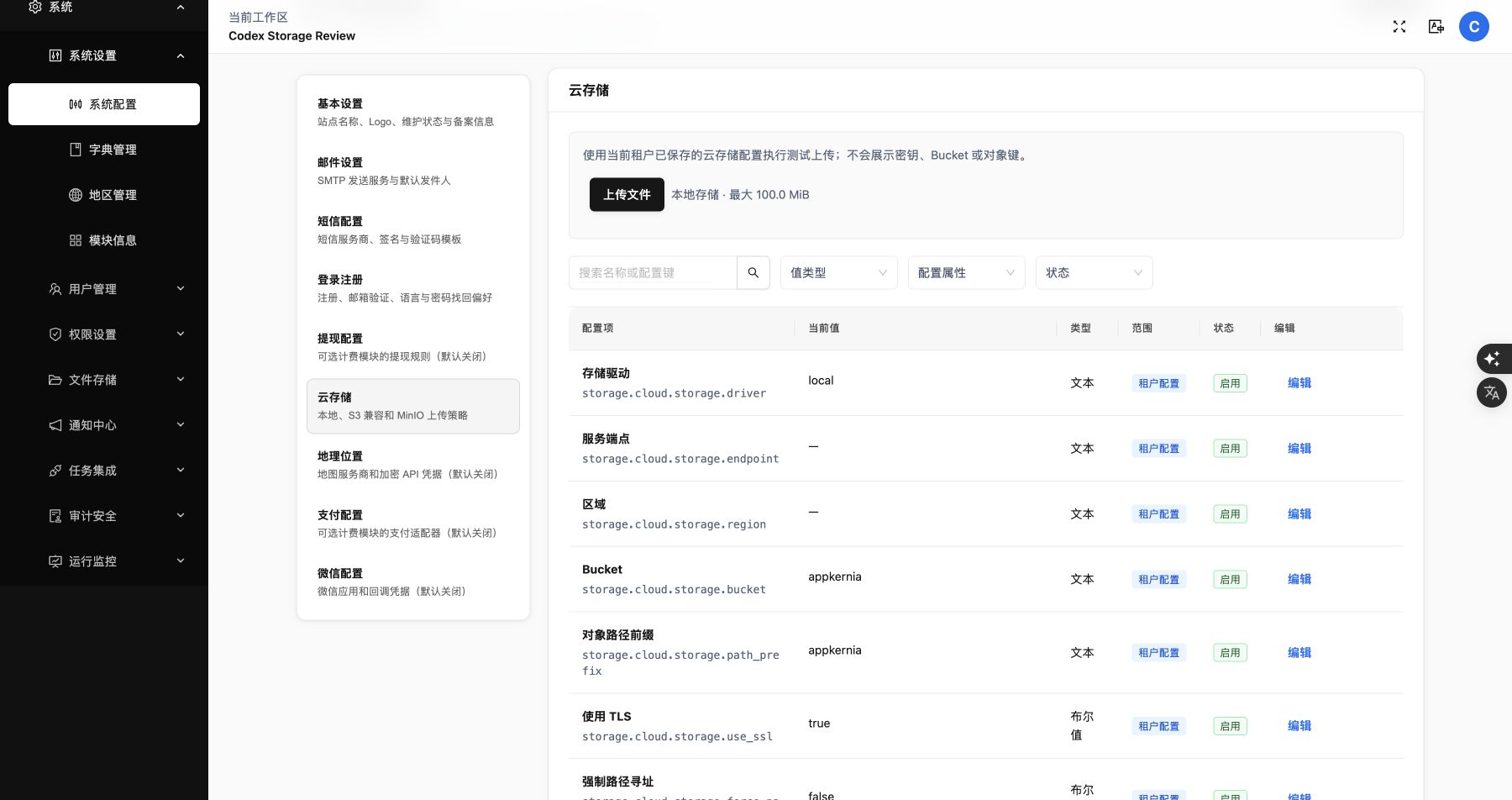
These images come from recorded local Chromium acceptance with a local Go API and an isolated PostgreSQL database. They contain no production account, customer data, or real secret.
Real Mobile features
These images show HBuilderX 5.06 compiled resources running in an iPhone 16 Pro simulator on iOS 18.6. They prove rendering and interaction in that named simulator, not an iOS device, Android, HarmonyOS, or a production release.
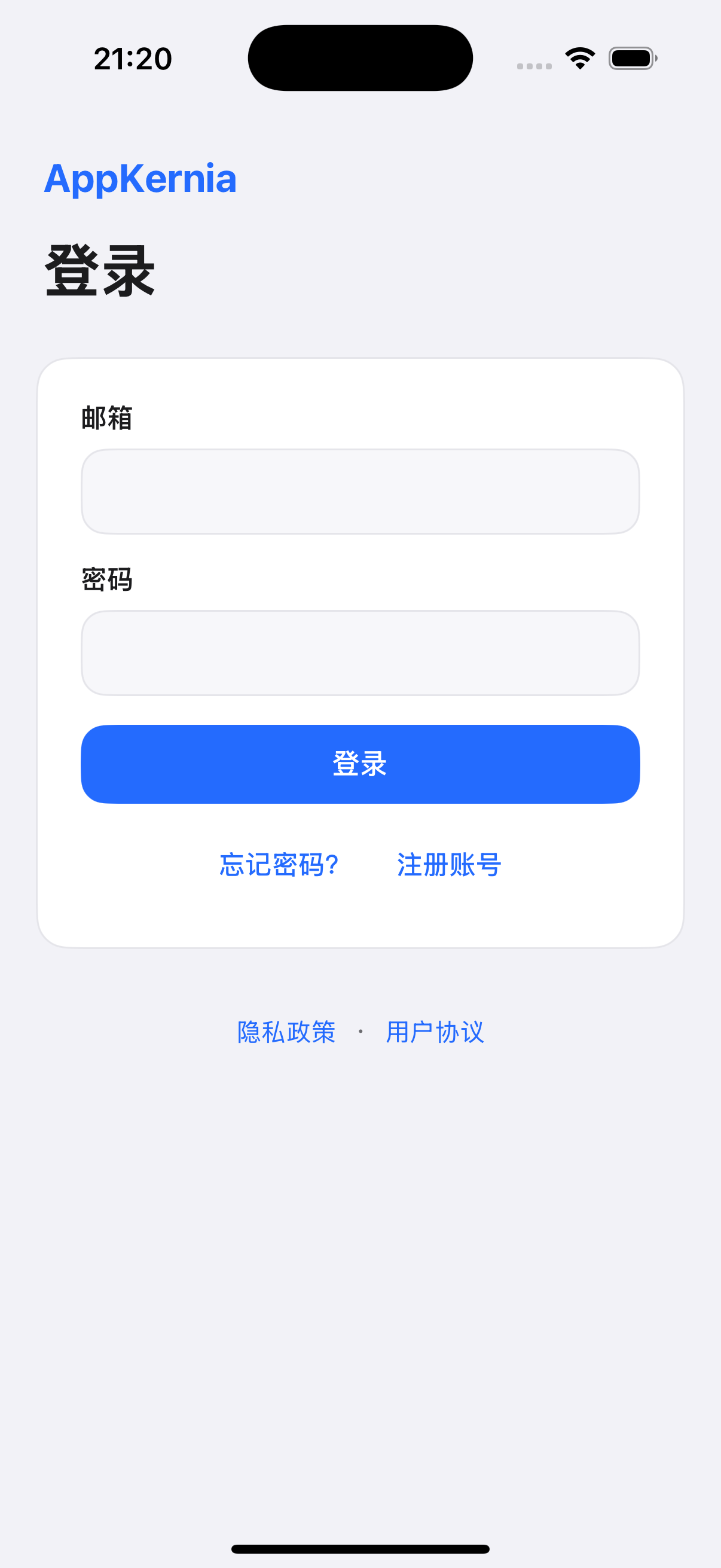
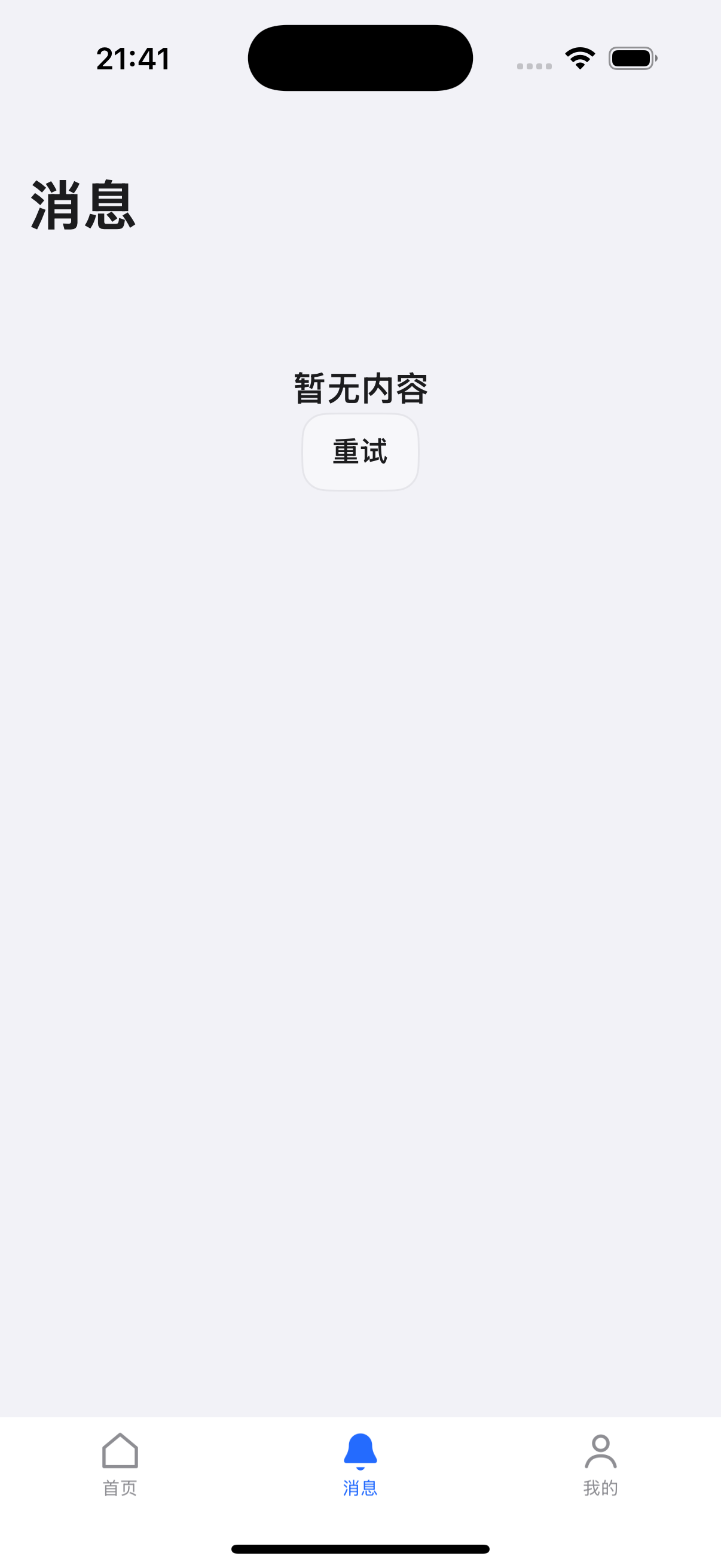
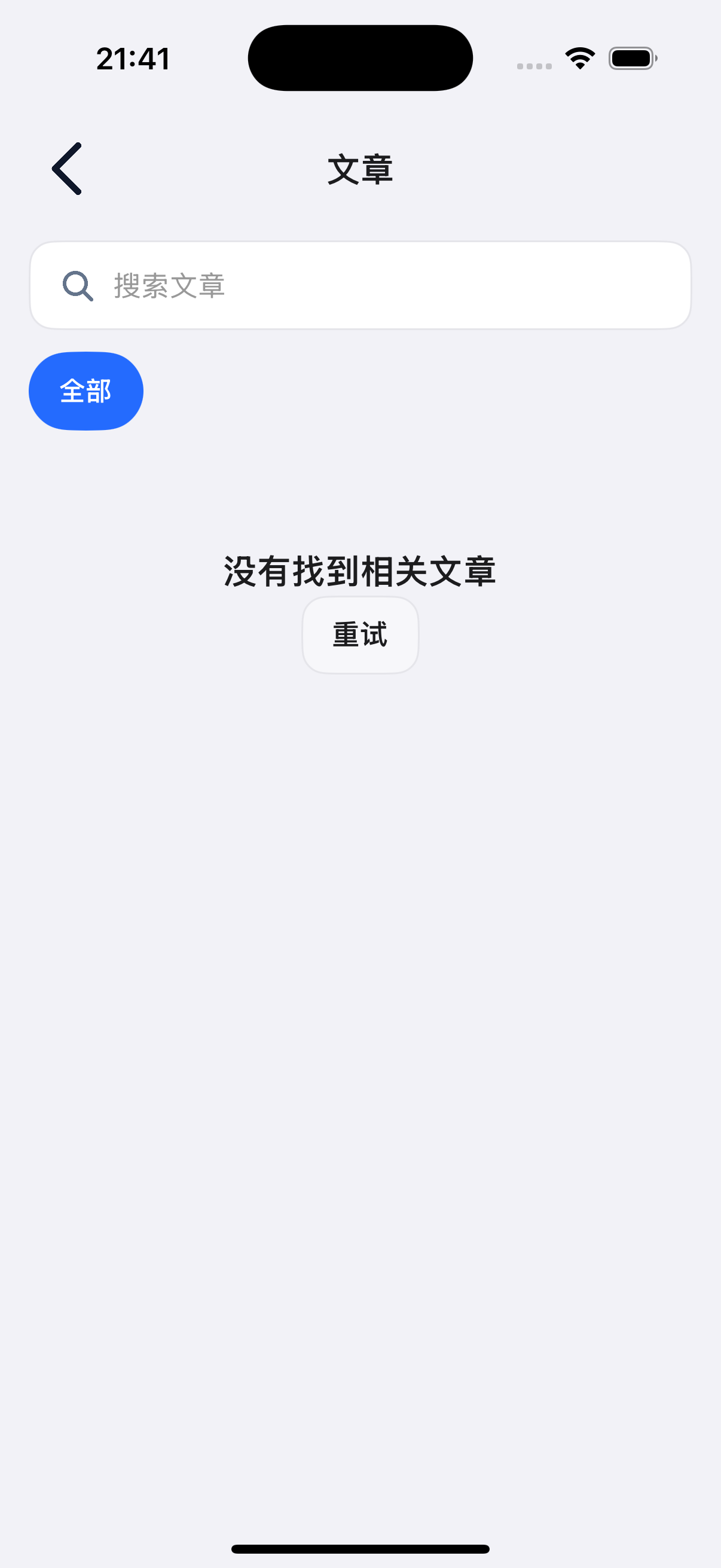
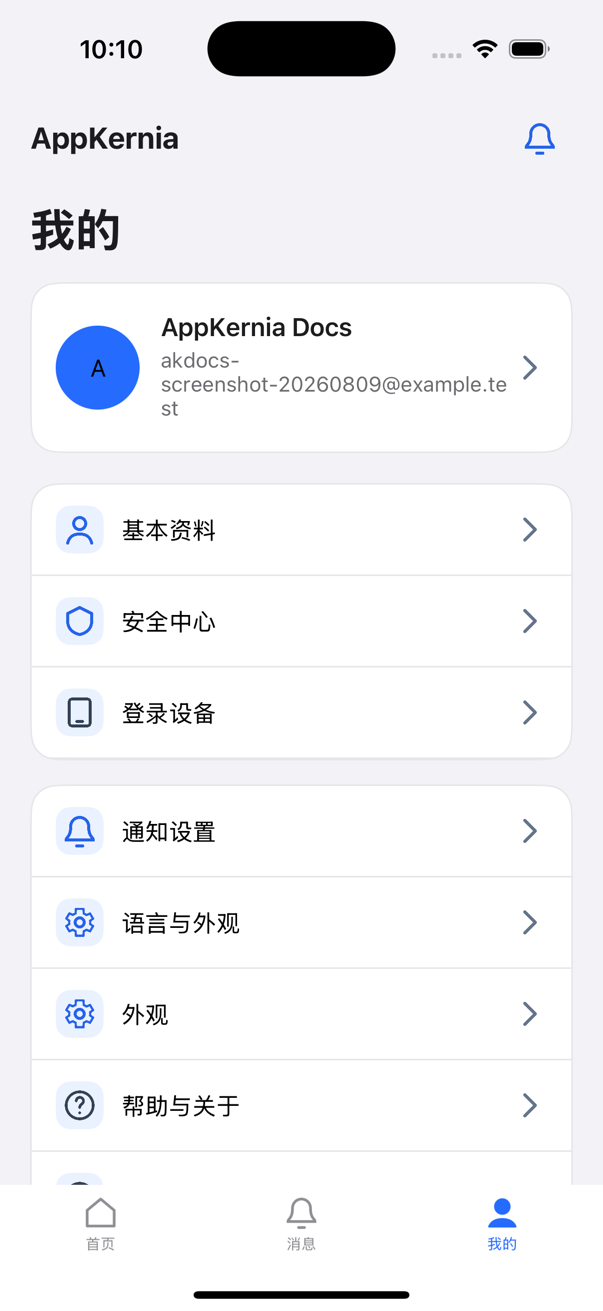
The Mobile acceptance run encountered a stalled HBuilderX resource-sync phase, so the repository's recorded standard-base data-container refresh loaded the newly compiled resources. The source evidence documents that boundary; it does not prove one-click sync, a custom base, secure-storage runtime behavior, or any physical device.
Where it is going
AppKernia is still moving toward its first stable Core release. The priority is not to accumulate more screens, but to close the loop across code, OpenAPI, database, two languages, and tests for identity, users, tenants, authorization, files, notifications, content, configuration, and the essential Mobile experience.
Development follows three directions:
- Stabilize the core: finish critical security and concurrency paths, versioned migrations, generated clients, and repeatable local and CI acceptance.
- Prove each platform: continue collecting Android, iOS, and HarmonyOS build and real-device evidence instead of treating theoretical support as a runtime result.
- Make the ecosystem contributable: provide fuller example domains, a component gallery, module generators, extension ports, and approachable tasks for contributors.
The roadmap communicates direction, not guaranteed dates. Capability status follows repository implementation, tests, and platform evidence. See the Roadmap and implementation status.
Join from here
You do not need to understand the whole stack first. Correcting one sentence, adding a failed-path test, reproducing a platform issue, or improving one ak-* component are all useful contributions.
- Try it first with the quick start.
- Understand the boundaries through Core concepts and the Server API.
- Choose a contribution level in the contribution guide.
- If this direction solves a problem you also feel, Star AppKernia on GitHub so more developers can find it earlier.